

First, kill the obvious assumption: this isn’t a slot with a basketball skin
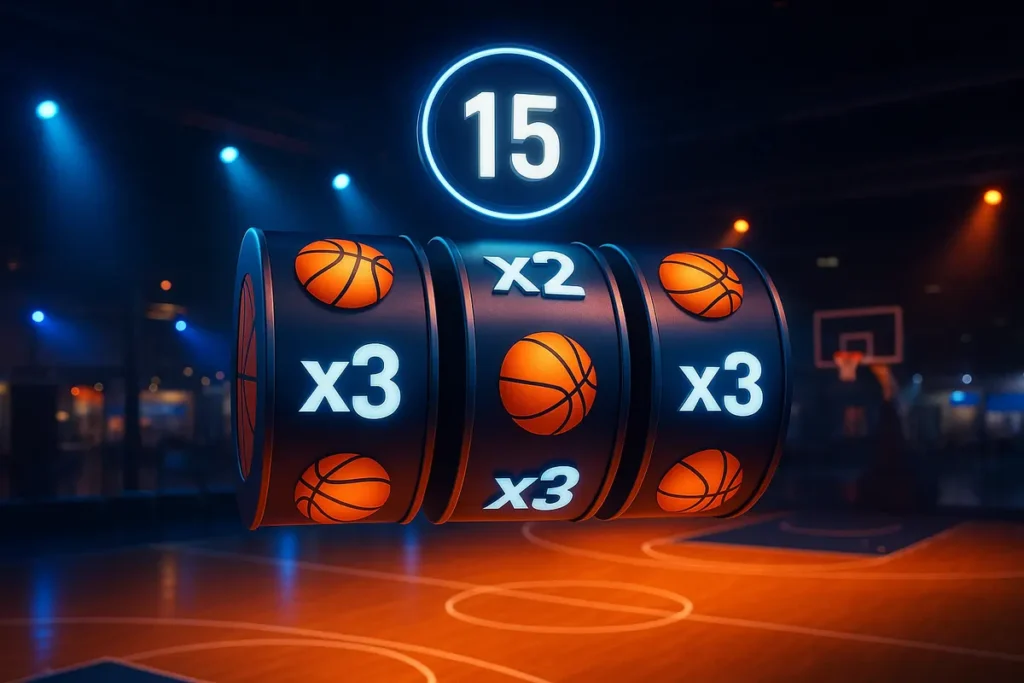
When BETBY brings new SlotBets Games to SBC Summit in Lisbon, the thing most people will get wrong in the first ten seconds is the word “slot”. There is no random number generator spinning those reels. The reel combination in BETBY SlotBets is produced by what actually happens on the court during a live match. Same visual grammar as a slot, reels, winning combinations, multipliers, but a completely different engine underneath.
That distinction is the whole product. It’s also why the announcement is more interesting than a standard “supplier books a stand” story.
What exactly is BETBY showing in Lisbon?
The sportsbook supplier is putting its newly launched SlotBets Games category and the BETBY SlotBets product at the centre of its presence at the show. Concretely, that means three things:
- Stand C206, where attendees can try BETBY SlotBets first-hand.
- A dedicated SlotBets press conference in Auditorium III at the Media Hub, led by Chris Nikolopoulos, BETBY’s Chief Commercial Officer, who will set out the commercial thinking and run a live demonstration.
- Guests from BETBY’s partner network joining that session to talk about how the format fits different operator strategies.
Bringing partners on stage rather than only executives is a deliberate signal. New content categories live or die on operator adoption, and a supplier that can put actual customers in front of a microphone is telling the room that the product is already in commercial conversations, not sitting in a lab.
How does a SlotBasketball round actually work?
SlotBasketball is the first application of the format to real sport, and the mechanics are tight enough to describe in a sentence: each round lasts 15 seconds, split into three five-second windows, and the highest-value event recorded in each window determines one reel.
So the sequence runs like this:
- A 15-second betting round opens, tied to a live basketball match in play.
- Window one (five seconds) resolves and sets the first reel from the highest-value event in that slice of play.
- Window two sets the second reel. Window three sets the third.
- The finished combination is read the way a slot line is read, with winning combinations and multipliers applied.
The unpredictability comes from the game itself. A quiet five seconds and a fast break produce different symbols, which is the part BETBY is selling: live sport supplies the variance that an RNG normally has to manufacture.
How is that different from a normal slot or a crash game?
Enough to matter, and the differences are worth being precise about rather than hand-waving. Here’s the honest comparison based on what BETBY has described publicly.
| Element | Standard RNG slot | BETBY SlotBets (SlotBasketball) |
|---|---|---|
| What sets the outcome | A certified random number generator | The highest-value event in each five-second match window |
| Round length | Player-paced, spin on demand | Fixed 15-second rounds, three five-second windows |
| Source of variance | Mathematical model | Live sporting action |
| What the player watches | The reels | The match and the reels together |
| Return figures | RTP published per game | Not disclosed in the launch announcement |
BETBY calls playing the format “slotbetting”, and it frames the wider SlotBets Games category as something that should develop its own mechanics, terminology and player experience, the way crash games did. That comparison is a useful benchmark and a demanding one. Crash became a category because dozens of studios shipped versions of it, players learned the vocabulary (cash-out, auto cash-out, multiplier) and operators built dedicated lobbies. A category isn’t declared by one supplier; it’s confirmed when competitors copy you.
Why build this at all? The cross-sell problem
BETBY is explicit about the itch it’s scratching: limited natural cross-selling between sportsbook and casino audiences. Anyone who has looked at operator retention data knows the shape of it. The two verticals sit in the same app, share the same wallet, and still barely share players.
Kirill Nekrasov, BETBY’s Head of Innovation and R&D, put it plainly: “SlotBets came from a very clear industry problem. Sportsbook and casino often sit next to each other, but the player experience between the two is still very different.”
The intended fix runs in both directions. Casino-first players get a familiar interface, reels and multipliers, as an entry point into live sport without having to learn handicaps, totals or in-play pricing. Sportsbook players get a faster, more continuous way to interact with a match than waiting out a 40-minute game for one bet to settle. Whether either group actually crosses over is an empirical question that only operator data will answer, and it’s the question worth pressing BETBY on at the stand.
If there’s no RNG, where does fairness come from?
This is the part the industry will chew on longest. RNG games are audited by testing labs; the generator is certified, the maths model is fixed, and the RTP is a published number. Take the RNG out and the integrity conversation moves somewhere else entirely, onto the sports data layer.
With outcomes driven by live match events, the things that decide whether the product is trustworthy are the accuracy of the event data, how “highest-value event” is defined and applied consistently, latency between the court and the client, and what happens when a feed drops mid-round or a scoring event is later corrected. None of that is a criticism of the product; it’s the standard set of questions any event-driven betting mechanic has to answer, and it’s exactly the sort of detail a live demo should expose. If you’re on the floor at Lisbon, ask about void rules and feed failover before you ask about lobby art.
What should operators actually do with this?
Treat it as a lobby placement decision, not a game order. A few practical points:
- Decide where it lives. A format this hybrid falls between the sportsbook and the casino tab, and the wrong placement will bury it. Crash games only scaled once they got their own visible category.
- Check the sport calendar dependency. Content tied to live basketball is only available when basketball is being played, which makes coverage depth and schedule gaps a commercial variable, not a technical footnote.
- Map it against your licences. Whether a product like this is classified as betting or as gaming content shapes tax, reporting and approvals in several regulated markets. Get compliance in the room early.
- Watch the speed of play. Fifteen-second rounds mean a high number of decisions per hour, and that has player-protection consequences regardless of the underlying margin.
The honest caveat on fast-cycle products
Any format built on short, repeating rounds increases how much a player can stake in a given hour. The supplier’s margin is built into the pricing of the combinations, the same way a bookmaker’s overround or a slot’s house edge is, and over time that edge is what the operator earns. Faster rounds don’t change the edge; they change how quickly it’s applied. Operators shipping this kind of content should have deposit and loss limits, session reminders and self-exclusion tools sitting right next to it, and players should treat it as paid entertainment rather than a way to make money.
That aside, the idea is a genuinely fresh one. Suppliers have spent years trying to bolt sportsbook and casino together with shared wallets, combo promos and cross-sell banners. BETBY’s answer is to stop bridging the two products and build a third one whose maths comes from the match. Lisbon will be the first real read on whether the room buys it.

Leave a Reply