


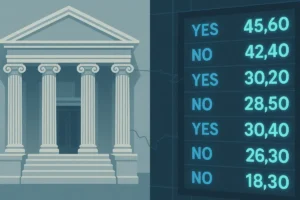
The numbers that came out of the leak
Strip away the framing and the leak produced a short list of hard figures. They are worth reading together rather than one at a time.
| Figure | What it refers to |
|---|---|
| 84,000+ | Documents in the CGA leak linked to Curaçao-licensed betting companies |
| USD 48.22 | Average daily spend attributed to a Chilean online player in 2024 |
| USD 47.49 | Projected average daily spend held over the following four years |
| 23.2% | Growth EstelarBet projected over a three-year horizon |
| 2 | Chilean Primera División clubs sponsored as part of the post-2025 commercial push |
The EstelarBet material is the most detailed piece. According to Chilean outlets that accessed the documents, the operator forecast “solid annual growth” of 23.2% over three years, and that forecast rested on a commercial and marketing programme rolled out from 2025 onward: two top-flight football sponsorships plus large-scale influencer campaigns.
What USD 48.22 a day actually measures
Here is where a mentor’s caution is worth more than a headline. A daily average of USD 48.22 sounds enormous, and if you multiply it by 365 you get something close to USD 17,600 a year per player. Almost nobody believes that describes a typical Chilean punter’s annual outlay. So what is the number?
Three things make it smaller in practice than it looks:
- It is an average, and averages in gambling are dragged upward by a small group. Player value distributions are extremely skewed. A handful of high-stakes accounts can lift a mean well above what the median player does.
- “Spend” in an operator deck usually means wagering or deposits, not losses. These are different quantities by an order of magnitude. If a player deposits USD 20 and recycles winnings through a slot with a 96% RTP, their total stake for the day can pass USD 48 easily while their actual net loss stays in single digits — the mathematical expectation on USD 48 of turnover at 4% house edge is about USD 1.92.
- “Daily” probably means per active player per active day, not per registered account every day of the year. The leaked wording, as reported, does not settle this. Treat it as an ARPU-style planning metric rather than a household budget line.
None of that makes the figure harmless. A metric held flat at USD 47.49 for four years while the operator forecasts 23.2% growth tells you exactly where the growth is supposed to come from: more players, not more spend per player. That is an acquisition strategy, and acquisition strategies are built on shirts, streams and influencers.
Why the corporate structure matters as much as the spend
The less quotable but arguably more consequential part of the leak concerns plumbing. The documents describe operators delegating formal administration to external corporate service firms, leaning on local intermediaries for payment gateways and technology services, and placing ultimate beneficial owners behind parent companies domiciled in Curaçao.
That is a familiar architecture in markets without a live domestic licensing regime. A player in Chile deposits through a local-looking payment rail, plays on a brand advertised by a Chilean footballer’s shirt, and is contractually dealing with a company whose regulator sits in the Caribbean. Dispute resolution, responsible-gambling obligations, advertising limits and tax all follow the licence, not the marketing.
Curaçao matters here because it has been rebuilding that licence. The jurisdiction replaced its old master-licence and sub-licence arrangement with direct supervision by the Curaçao Gaming Authority, precisely to get visibility into who owns what. A leak of 84,000 of that regulator’s own documents is an awkward result for a reform sold on transparency, and it hands journalists, legislators and rival operators a rare look at internal financial planning that is normally invisible.
The practical read for the industry
For operators, the lesson is uncomfortable and simple: forecasts, sponsorship rationales and player-value assumptions are now discoverable. Language written for an investor audience — projected growth, cost per acquisition, average daily spend — reads very differently when a legislator quotes it during a committee session on gambling harm. Expect the USD 48 figure to be recited in Chilean policy debate long after the context has been lost.
For affiliates and media, this is a reminder to label leaked numbers accurately. Writing “Chileans gamble USD 48 a day” is a misreading of a planning metric. Writing “internal documents from a Curaçao-licensed operator put average daily player spend at USD 48.22 in 2024” is both defensible and more interesting.
For players, the useful takeaway has nothing to do with the leak’s politics. It is that operators model you as a number with a projected four-year value, and the marketing you see — the club badge, the influencer code — exists because that number justifies the spend. Every game in the catalogue carries a house edge, so spend is a cost of entertainment rather than a route to income. Set a deposit limit before you play, use session reminders and cool-off tools where they are offered, and treat any budget you cannot comfortably lose as a signal to stop. Support services for gambling harm are free and confidential in most countries, including Chile.

Leave a Reply