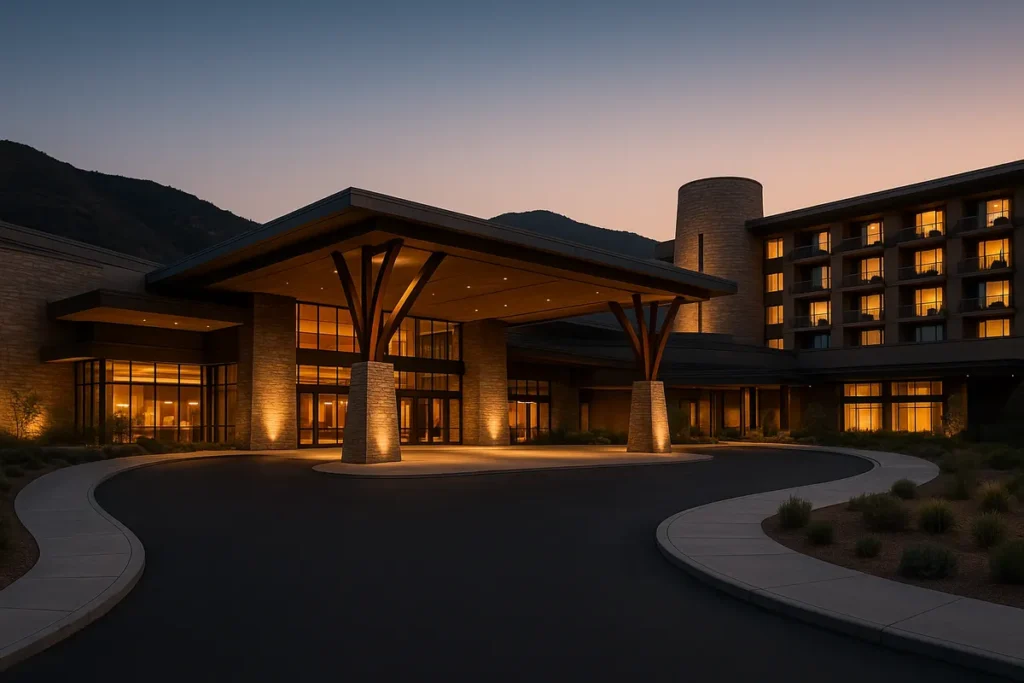


Drive east out of San Diego and the strip malls thin out fast. Twenty-odd minutes later the road climbs into dry hills, and the parking structure at Jamul Casino Resort is the tallest thing in sight. It’s a property that has spent its whole life being described in relation to somewhere else: near San Diego, not quite in it.
That property now has a chief executive for the first time. The new Jamul Casino Resort CEO is Chris Kelley, a hospitality and gaming operator with more than 20 years of senior leadership behind him, and the appointment says as much about how tribal casino enterprises are structuring themselves as it does about one hire.
The appointment in plain terms
Kelley takes responsibility for Jamul Casino Resort’s operations and its strategic expansion. Beyond the day-to-day of the casino floor and the hotel, he will work with the Board of the Jamul Indian Village Development Corporation on economic and Tribal interests that sit outside the existing gaming business.
That second part is the tell. A general manager runs a building. A CEO reporting to a tribal development corporation is being asked to think about the balance sheet of a nation, of which the casino happens to be the largest asset.
Erica M. Pinto, Chairwoman of the Jamul Indian Village Development Corporation, said what impressed the tribe was that Kelley had built a reputation across his career as a strategic thinker and a results-oriented leader, and framed his arrival as a homecoming to San Diego.
Why the résumé matters more than the title
Kelley joins from Hard Rock Casino Tejon, where he was President and oversaw the opening of what has been described as the largest private hospitality investment in Kern County history. Opening a property is a specific skill set: construction handover, hiring several hundred people at once, getting a floor licensed and live, and absorbing the first six months of chaos without burning the brand.
Before Hard Rock he was inside MGM Resorts International for a long stretch, including roles that put him in charge of properties in three different regulatory environments. He also began his career in Southern California tribal gaming, at Viejas Casino & Resort, where he served as CFO and later General Manager.
| Role | Property / group | What it involved |
|---|---|---|
| President | Hard Rock Casino Tejon | Opened the largest private hospitality investment in Kern County history |
| President & COO | MGM Resorts International, Northeast Group | Oversight of MGM Springfield (Massachusetts) and Empire City (Yonkers, New York) |
| President & COO | MGM Northfield Park | Regional casino operations in Ohio |
| CFO | MGM Detroit | Property finance in a commercial, city-licensed market |
| CFO, then General Manager | Viejas Casino & Resort | Early-career leadership in Southern California tribal gaming |
Read that list as a sequence rather than a list of logos. Finance first, then operations, then multi-property oversight, then a ground-up opening. It is close to the ideal training path for someone whose brief is expansion, and the Viejas years mean he already knows the competitive map of Southern California, which is one of the densest tribal gaming clusters in the United States.
What “first-ever CEO” tells you about tribal casino leadership
Tribal gaming in the US operates under the Indian Gaming Regulatory Act, with oversight from tribal gaming commissions and the federal National Indian Gaming Commission. Revenue funds government services, infrastructure and community programmes, so the enterprise is accountable to a tribal council or development corporation rather than to public shareholders.
Historically that often meant a general manager plus a board. Creating a CEO seat changes the shape of the org chart in a few concrete ways:
- One executive owns strategy and capital planning, not just property performance.
- Diversification, hospitality, real estate, non-gaming ventures, gets a permanent advocate at the top.
- The enterprise can recruit from the commercial operator pool, because the job title and remit now match what those candidates left behind.
- Board members can govern instead of managing, which is healthier for both sides.
Plenty of tribal enterprises have already gone this route. Each one that does makes the talent market more fluid: executives now move between commercial giants and tribal operators in both directions, which was far less common two decades ago.
The California context, and the online question
Here is the part that matters most to anyone following digital gambling. California has no legal online casino and no legal online sports betting. The 2022 ballot measures that tried to open sports wagering, one tribal-backed and one operator-backed, were both rejected by voters by wide margins. Since then the conversation has been slow, tribal-led, and notably unwilling to hand distribution to outside brands.
So no, this appointment does not signal an iGaming launch. What it signals is capacity. When a tribal enterprise builds a corporate layer with expansion in its job description, it becomes a more credible participant in whatever eventually gets negotiated in Sacramento, whether that is a tribally controlled online framework, shared platforms, or nothing at all for several more years. Operators and suppliers watching California should be tracking who tribes are hiring, not just what tribes are saying.
What changes for players, realistically
Leadership changes rarely show up on the floor immediately, and when they do, it tends to be in this order:
- Non-gaming first. Food and beverage, entertainment programming and hotel packages are the fastest levers and the cheapest to test.
- Loyalty and reinvestment. Tier structures, comp formulas and marketing spend get reviewed, because that is where a former CFO looks earliest.
- Floor mix. Slot product, table game spreads and limits shift gradually as performance data comes in.
- Capital projects. Anything structural runs on a multi-year timeline, so treat expansion talk as a direction, not a date.
One thing that does not change: the math. Game odds are set by the product and the regulatory framework, not by who runs the building. A slot’s RTP and the house edge on a blackjack or baccarat layout stay exactly where they were, and every game on the floor keeps its built-in advantage for the house over the long run. A new executive can improve the buffet; they cannot improve your expected value.
Common questions
Who is the Jamul Casino Resort CEO?
Chris Kelley, appointed as the property’s first-ever Chief Executive Officer. He brings more than 20 years of leadership across hospitality, gaming and entertainment.
Where did Chris Kelley work before?
He was President of Hard Rock Casino Tejon, and before that held senior roles at MGM Resorts International, including President & COO of the Northeast Group, President & COO of MGM Northfield Park and CFO of MGM Detroit. He began his career at Viejas Casino & Resort in San Diego as CFO and later General Manager.
Who does he report to?
The Board of the Jamul Indian Village Development Corporation, the tribal entity that owns the casino enterprise.
Does this mean Jamul is moving into online gambling?
There is no indication of that, and California currently permits neither online casino nor online sports betting. The appointment is about operations and expansion of the existing enterprise and the tribe’s broader economic interests.
If gambling stops being entertainment for you, deposit and loss limits, cool-off periods and self-exclusion tools exist for exactly that reason, and support lines are free and confidential. Play with money you can afford to lose, and treat the house edge as a cost, not a bet you expect to win back.

Leave a Reply