

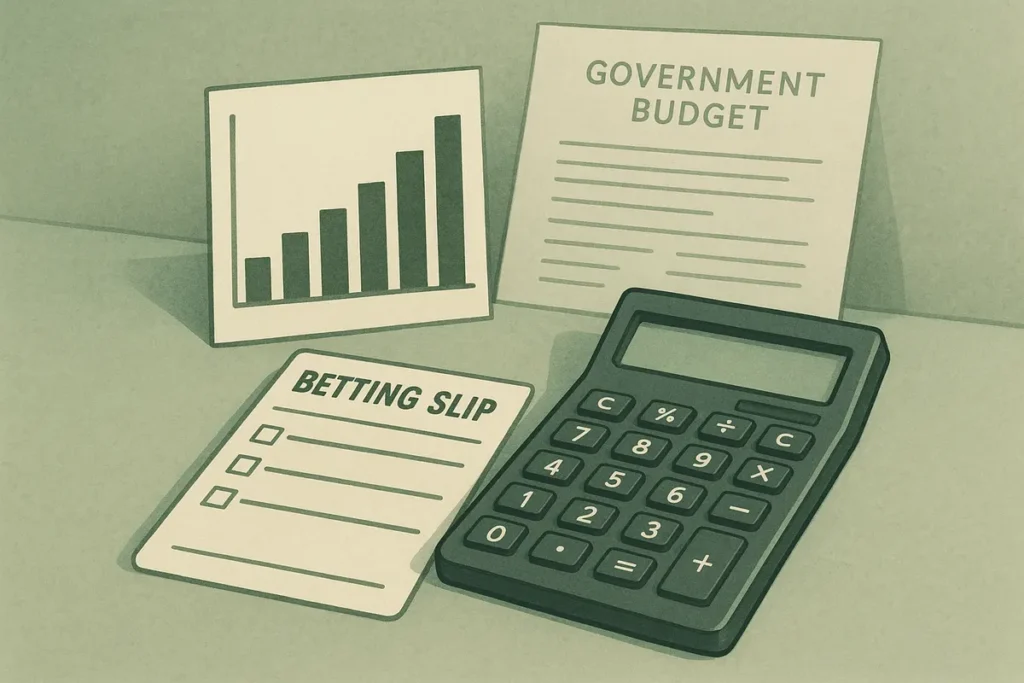
Two per cent. That is the entire rate Ireland currently charges on money staked with bookmakers, and it is the number the country’s betting industry is now lobbying hard to protect. Irish media report that the government is weighing a gambling tax increase in the 2027 budget, lifting that 2 per cent levy on customer stakes from next year, on top of an already announced plan to double pool betting duty from 1 per cent to 2 per cent.
A one-point move sounds trivial. In a turnover tax, it isn’t. Understanding why is the difference between reading the headline and understanding the industry.
The proposal on the table
The reported plan has two parts. The first is the increase to pool betting duty, from 1 per cent to 2 per cent, which was flagged earlier. The second, and the one operators are actively pushing back on, is a rise in the 2 per cent duty applied to stakes placed with bookmakers. According to Irish reporting, any increase would cover both online and retail betting, so a shop in a market town and an app on a phone would be treated the same way.
The stated purpose is revenue. Ireland’s 2027 budget is reported to involve roughly €7bn in public spending alongside €1.5bn in tax reductions, and betting duty is one of the few levers a finance ministry can pull without touching income tax or VAT. Gambling taxes are politically cheap: the sector is profitable, the constituency is small, and few voters campaign for lower betting duty.
No final rate has been published. Treat every specific figure beyond the current 2 per cent as speculation until a budget document says otherwise.
Why a turnover tax hurts more than the rate implies
Most gambling taxes worldwide are charged on gross gaming revenue, meaning the operator’s win after paying out customers. Ireland’s betting duty works differently. It is charged on turnover, the total amount staked, regardless of whether the bookmaker won or lost on those bets.
That distinction drives the whole argument. A sportsbook’s gross win is typically a single-digit to low-double-digit percentage of the money staked, because the vast majority of stakes go straight back out as winnings. So a tax on stakes consumes a much larger slice of actual revenue than the headline rate suggests.
The arithmetic below is illustrative, not a set of official figures. It simply shows what a stake tax costs as a share of a bookmaker’s gross win at different margins.
| Bookmaker gross win margin | Cost of a 2% stake tax (as % of gross win) | Cost of a 3% stake tax (as % of gross win) |
|---|---|---|
| 8% | 25.0% | 37.5% |
| 10% | 20.0% | 30.0% |
| 12% | 16.7% | 25.0% |
| 15% | 13.3% | 20.0% |
Read the middle row. At a 10 per cent margin, a 2 per cent turnover tax already takes a fifth of gross win before a single wage, rent bill, marketing euro or compliance cost is paid. Add a percentage point and you are at 30 per cent. That is why operators describe a one-point change as a step change rather than a tweak, and why low-margin, high-turnover products, such as heavily traded football markets and horse racing, feel it first.
There is also a nastier feature of turnover taxes: they are charged in losing months too. A bookmaker that has a bad run of results still owes duty on every euro staked.
What’s driving the pressure
Three forces are pushing in the same direction.
- Budget arithmetic. Spending commitments and promised tax cuts have to be funded from somewhere, and betting duty is a simple, quick-to-implement line item.
- A regulatory reset. Ireland has been building out a statutory gambling regulator under the Gambling Regulation Act 2024, with licensing, advertising and safer gambling rules being layered in. Periods of regulatory reform tend to attract fiscal reform alongside them.
- The international comparison. Ireland’s 2 per cent looks modest next to gross revenue tax rates elsewhere in Europe, which makes it an easy target politically, even though comparing a turnover rate with a GGR rate is not a like-for-like exercise.
The industry’s counter-argument
The Irish Bookmakers Association has criticised the proposal, warning, as reported by the Racing Post, that higher duty would lead to more betting shop closures and job losses, and push activity toward illegal operators. The trade body points to the earlier doubling of betting duty from 1 per cent to 2 per cent as evidence of what follows.
The retail argument is the strongest one. A high street shop carries fixed costs, staff, rent, rates, machines, security, that an online brand does not, and its margin cushion is thinner. When duty rises on turnover, marginal shops in smaller towns are the first casualties. Online operators, by contrast, can absorb a rate change across a larger book or simply reprice.
The “black market” warning deserves more scepticism than it usually gets. Unlicensed sites are a genuine problem, and tax rises can widen the price gap that makes them attractive, but the scale of any shift depends heavily on enforcement, payment blocking and how visible licensed alternatives are. It is a real risk, not an automatic outcome, and it is an argument operators have an obvious incentive to make loudly.
How a gambling tax increase reaches players
In Ireland, betting duty is a liability of the operator, not a levy deducted from a punter’s stake at the counter, and recreational winnings are not taxed as income. So a rise would not show up as a line on your bet slip. It would show up in less obvious places.
- Prices, meaning odds. The cleanest way for a bookmaker to recover duty is to build a slightly wider margin into its markets. A shorter price on a football favourite is a tax pass-through in disguise, and most customers never notice it.
- Promotions. Free bets, price boosts, enhanced accumulator offers and acca insurance are discretionary marketing spend. They are usually the first budget trimmed when a cost line grows.
- Product mix. Operators lean toward higher-margin content when turnover taxes rise. Expect more emphasis on multiples, bet builders and casino-style products, and less on thin-margin single markets.
- Choice. Smaller operators and independent shops exit first. Fewer brands competing for the same customers generally means slightly worse pricing across the market.
- Sports funding. In Ireland, betting duty receipts have historically been linked to support for horse and greyhound racing, so the rate debate is also a racing funding debate.
What to watch, and how to read it
If you follow this sector, whether as a player, an affiliate or someone working in it, a few markers tell you more than the headlines.
- The base, not just the rate. A move to a gross revenue basis at a higher headline rate can cost operators less than a smaller turnover rise. Always ask what the tax is charged on.
- Whether retail and online are split. Differentiated rates would signal that the government has accepted the retail cost argument.
- The commencement date. Operators need lead time to reprice and reprogram. A mid-year start is far harder than a January one.
- Whether pool betting stays aligned. Pool duty moving to 2 per cent while fixed-odds duty moves higher would reopen the debate all over again.
- Licensing costs in parallel. Duty is one cost; new licence fees, levies and compliance obligations under the reformed regime stack on top.
For players, the practical takeaway is narrow but real: tax policy is one of the quiet inputs into the odds you are offered. If margins widen, the long-run cost of betting rises, exactly as a higher house edge does in a casino game. That is worth knowing when you compare prices across licensed bookmakers, because shopping around is one of the few levers a customer actually controls.
Nothing here changes the underlying maths. Bookmakers and casinos operate with a built-in margin, and over time that margin favours the house regardless of what duty rate a government settles on. Treat betting as paid entertainment, set deposit and loss limits before you play, and use the self-exclusion and cool-off tools your operator is required to offer if it stops being fun.
Frequently asked questions
What is Ireland’s current gambling tax rate?
Betting duty is charged at 2 per cent on stakes placed with bookmakers, covering both retail and online betting. Pool betting duty is currently 1 per cent, with an announced plan to raise it to 2 per cent. Revenue publishes the operative rules for operators.
Do players pay betting duty in Ireland?
Not directly. The duty is the operator’s liability rather than a deduction from your stake, and recreational gambling winnings are not taxed as income in Ireland. Costs can still be passed on indirectly through odds and smaller promotions. For anything relating to your own tax position, take professional advice.
Why do operators object to a one-point rise?
Because the tax applies to turnover rather than profit. At a 10 per cent gross win margin, a 2 per cent stake tax equals 20 per cent of revenue and a 3 per cent stake tax equals 30 per cent, so a single percentage point represents a large share of the money an operator actually keeps.
Has the increase been confirmed?
No. Irish media report that the government is considering a gambling tax increase for the 2027 budget. Until budget documents set out a rate, a base and a start date, the specifics remain speculative.